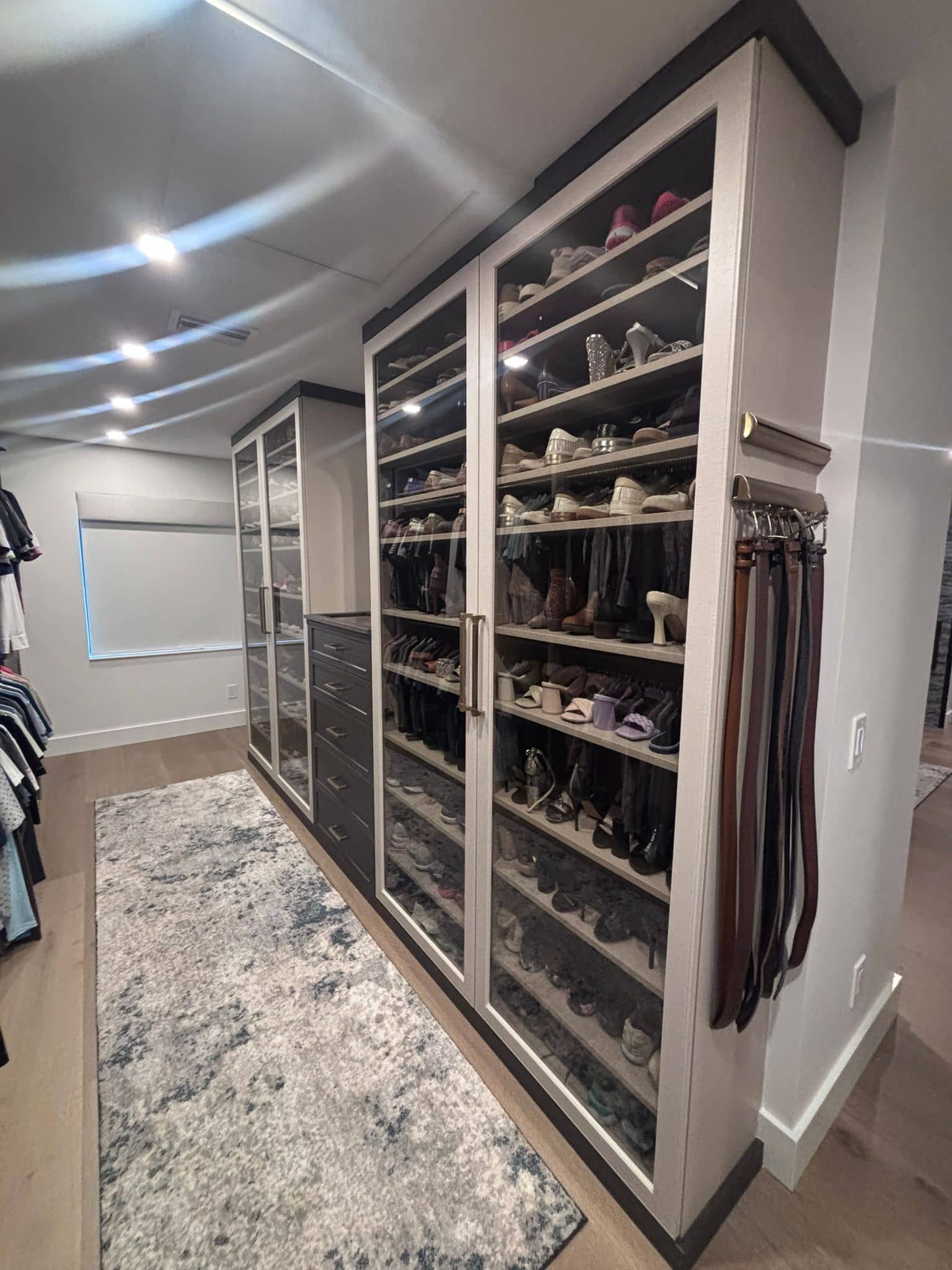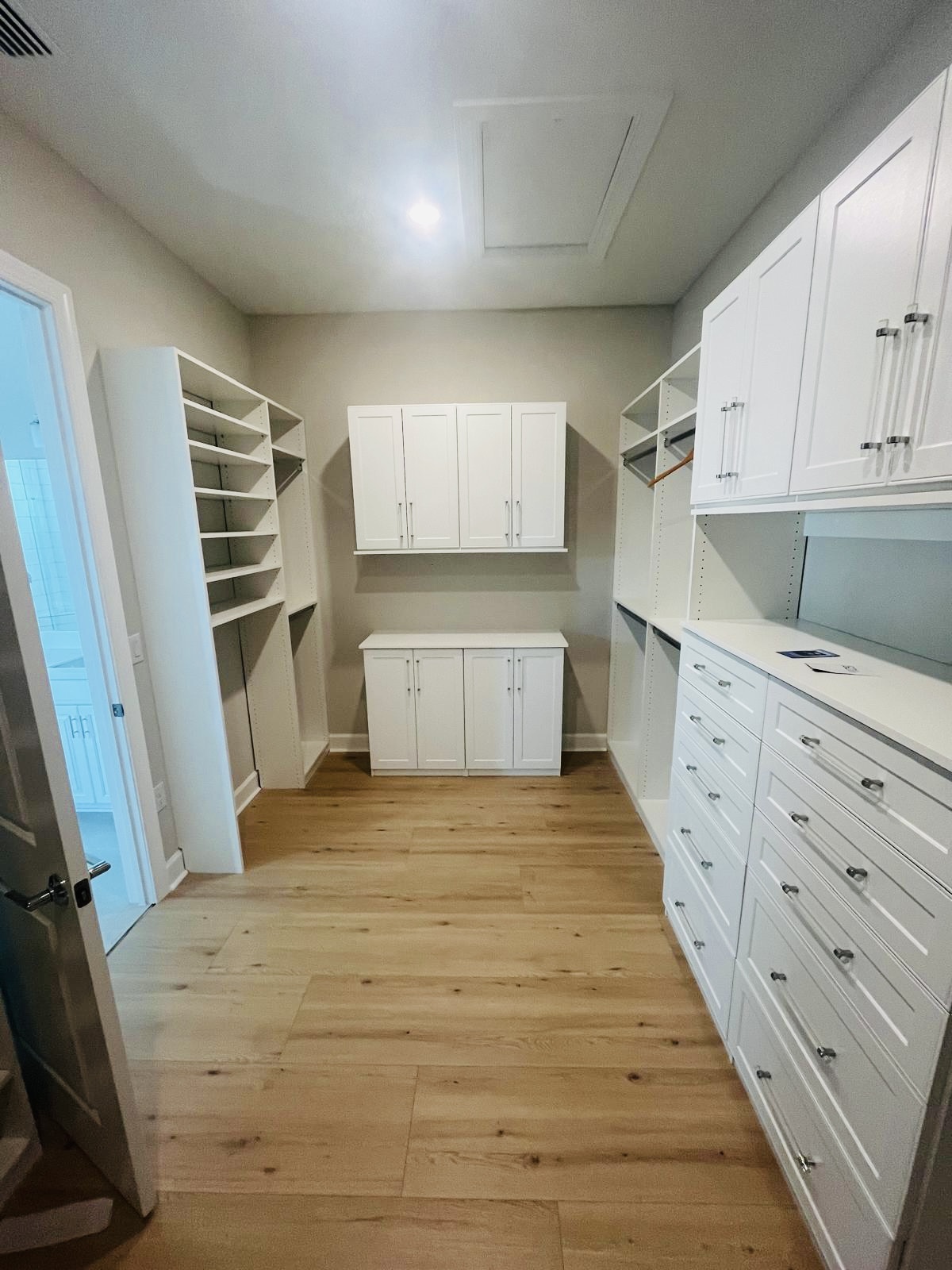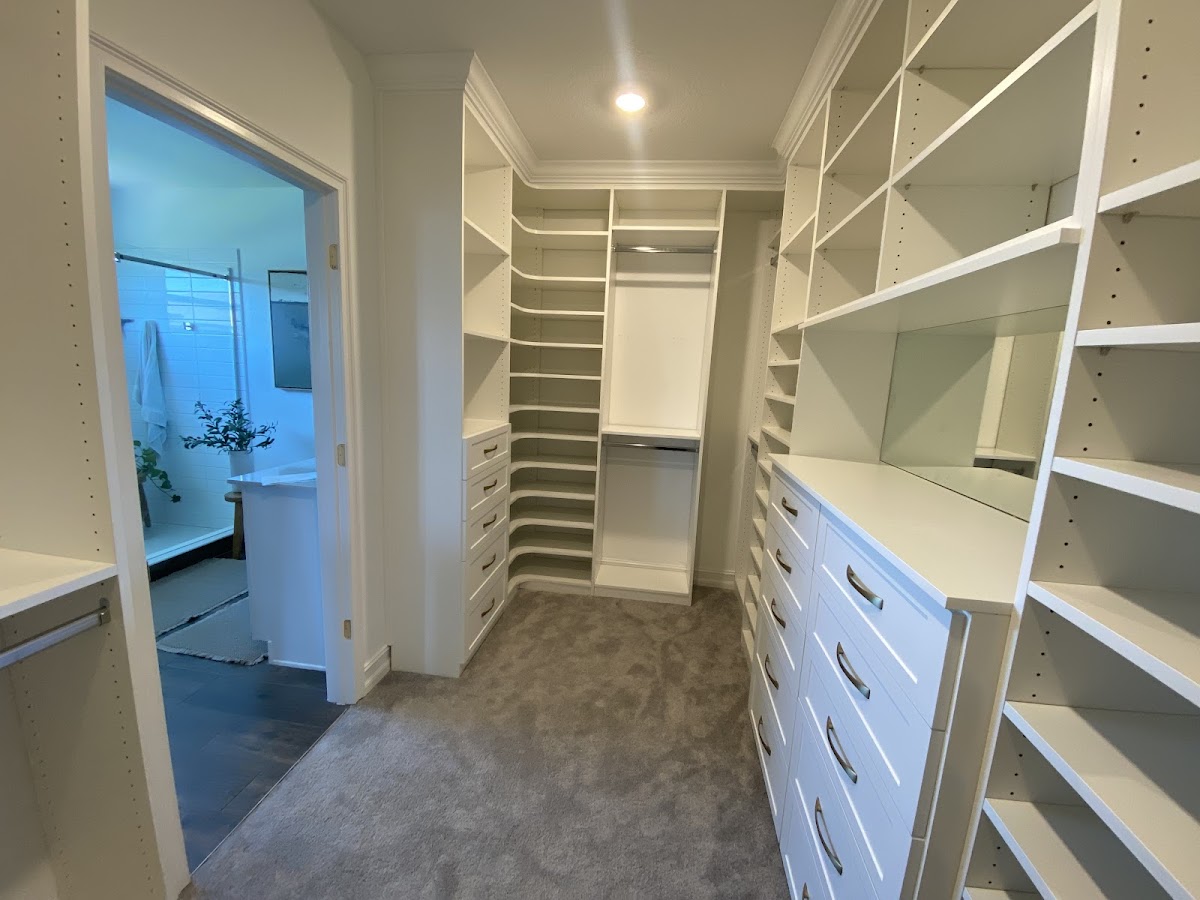
Professionally designed custom closets can be worth it for a small reach-in closet when the current layout wastes space, slows down your routine, or forces you to store everyday items somewhere else. The smaller the closet, the more important the layout becomes.
A reach-in closet may not look like a major home project, but it is often used every day. In Bradenton, Sarasota, and Lakewood Ranch homes, Dream Closets often sees small closets become much more useful with a better mix of hanging, shelving, drawers, and shoe storage.
What makes a small reach-in closet hard to use?
Small reach-in closets usually fail for one reason: they are too generic. A single shelf and rod are simple to build, but they do not match the way most people store clothes.
The top shelf becomes a stack of bins. The rod gets crowded with short items. Shoes collect on the floor. Folded clothes migrate to a dresser in another room. The closet may technically hold items, but it does not help you find them quickly.
A small closet also has less margin for mistakes. If 12 inches of width is wasted, that can be the difference between organized shoes and a floor pile.
When is a custom reach-in closet worth the investment?
It is worth considering when the closet creates daily friction. If you use the closet once a month, a simple organizer may be enough. If you use it every morning, the upgrade has more value.
A custom reach-in closet is often worth it when:
- The closet serves a primary bedroom, guest room, child's room, or home office.
- You need more hanging room but have unused wall height.
- Shoes, bags, or accessories are always on the floor.
- The closet is part of a home refresh or pre-sale improvement.
- You want the closet to match nearby cabinetry or built-ins.
For many homeowners, the value is not only storage. It is less time spent searching, fewer piles, and a room that feels finished.
How much can a better layout actually add?
A better layout can add more usable storage without changing the footprint. The most common improvement is splitting one long hanging rod into planned sections.
For example, a 6-foot-wide reach-in closet may have 72 inches of hanging rod. If most clothing is short, a designer may use part of the closet for double hanging and part for shelves or drawers. That can create room for shirts, pants, shoes, folded items, and accessories without expanding the closet.
Exact results depend on ceiling height, door type, return walls, and what you own. But small closets are often full of unused vertical space, especially above and below short hanging items.
How does a custom closet compare with store-bought organizers?
Store-bought organizers can help when the problem is simple and the closet dimensions are standard. They are usually faster to buy and cheaper upfront. The tradeoff is fit, durability, and design flexibility.
A custom closet is measured for the exact opening, wall returns, baseboards, and door clearance. It can include adjustable shelves, fixed panels, drawers, hampers, shoe zones, and finish options that match the home.
The comparison is not always "cheap versus expensive." It is temporary improvement versus a fitted system. If the closet is in a room you use daily or a room guests see, the fitted result may be worth the difference.
What should you avoid in a small closet design?
Avoid overbuilding. A small closet should not be packed with every accessory available. Too many drawers, shelves, dividers, and specialty inserts can make the closet feel tight again.
The best small closet designs are simple and precise. They prioritize the items that belong in that closet and avoid turning it into overflow storage for the whole house.
Common mistakes include:
- Adding drawers where open shelves would be more flexible.
- Using shoe shelves that are too shallow for larger shoes.
- Forgetting hamper space or laundry routines.
- Ignoring sliding door or bifold door access.
- Keeping long-hang space for clothes that are mostly short.
What facts should you know before asking for a quote?
Before asking for a quote, measure the approximate width, depth, and height of the closet, then count your main storage categories. A typical reach-in closet may be 24 inches deep, but usable access can be limited by doors and side returns.
Also note whether the closet has sliding doors, bifold doors, or hinged doors. Door style affects which parts of the closet are easiest to reach. A good design accounts for that, so you are not paying for storage that is hard to use.
Most professional consultations for a reach-in closet are quick because the space is compact. The key is being clear about what needs to live there and what can be stored somewhere else.
What budget signs should you watch before deciding?
Budget matters, but the lowest upfront price is not always the lowest long-term cost. A store-bought organizer that sags, does not fit the opening, or leaves the same shoe and drawer problems in place may need to be replaced later.
Before deciding, compare what is actually included: measurement, design, materials, hardware, installation, cleanup, and warranty. Also compare whether the system solves the daily problem or only adds a few shelves.
If the closet is used every day, a fitted system that lasts for years can be easier to justify than repeated small fixes. If it is used rarely, a simpler option may be the smarter choice.
How should you decide if it is worth it?
Decide based on use, frustration, and expected time in the home. If you use the closet daily, plan to stay in the home, or want a more finished guest room or child's room, a custom reach-in can be a practical upgrade.
If the closet holds rarely used items, a simpler shelf reset may be enough. The best answer comes from seeing a design and price for your exact space.
Dream Closets can review small reach-in closets throughout Bradenton, Sarasota, Lakewood Ranch, and nearby communities. If you want to know whether a custom system makes sense for your small closet, request a quote and compare the plan against the way you use the room today.