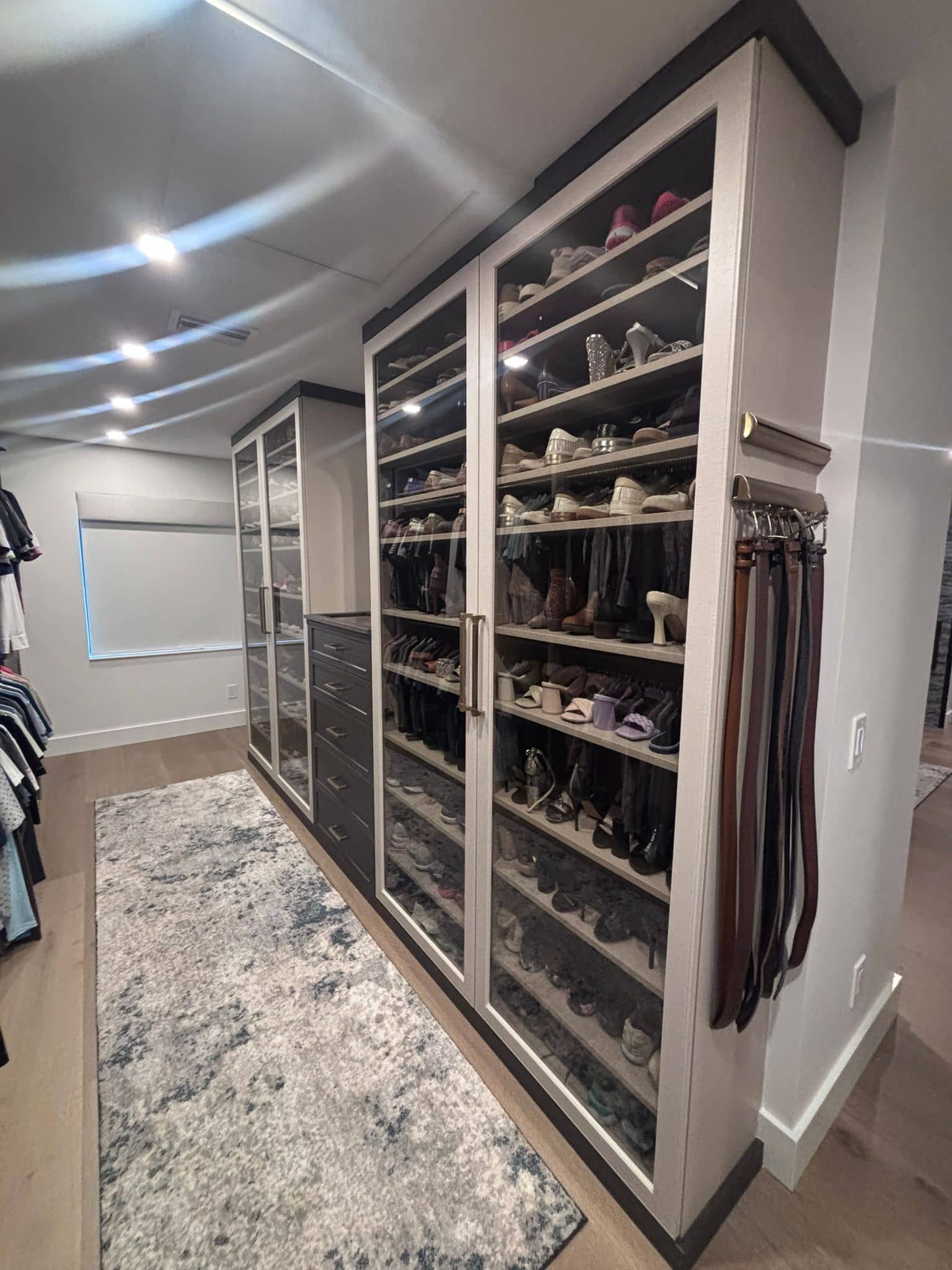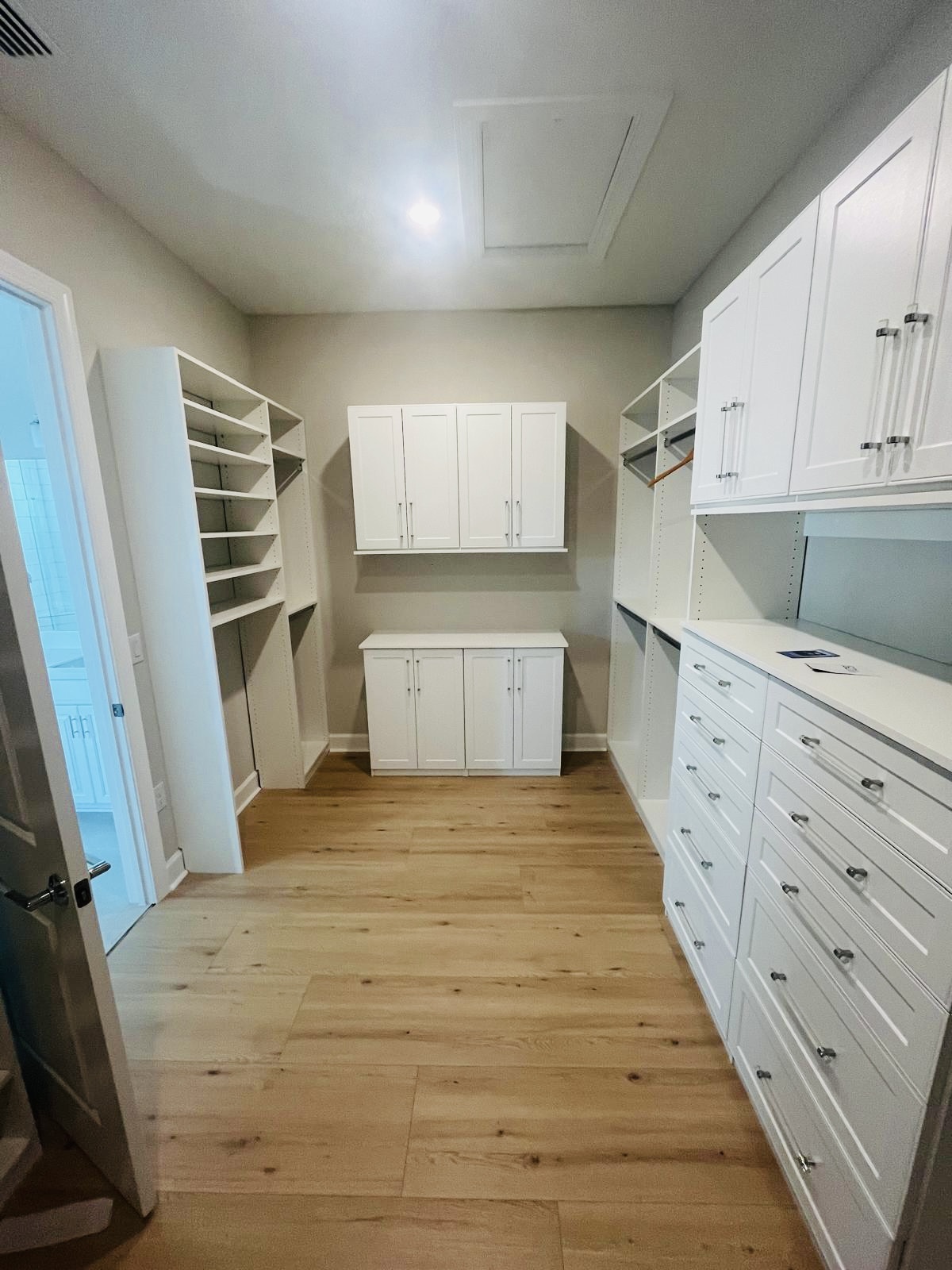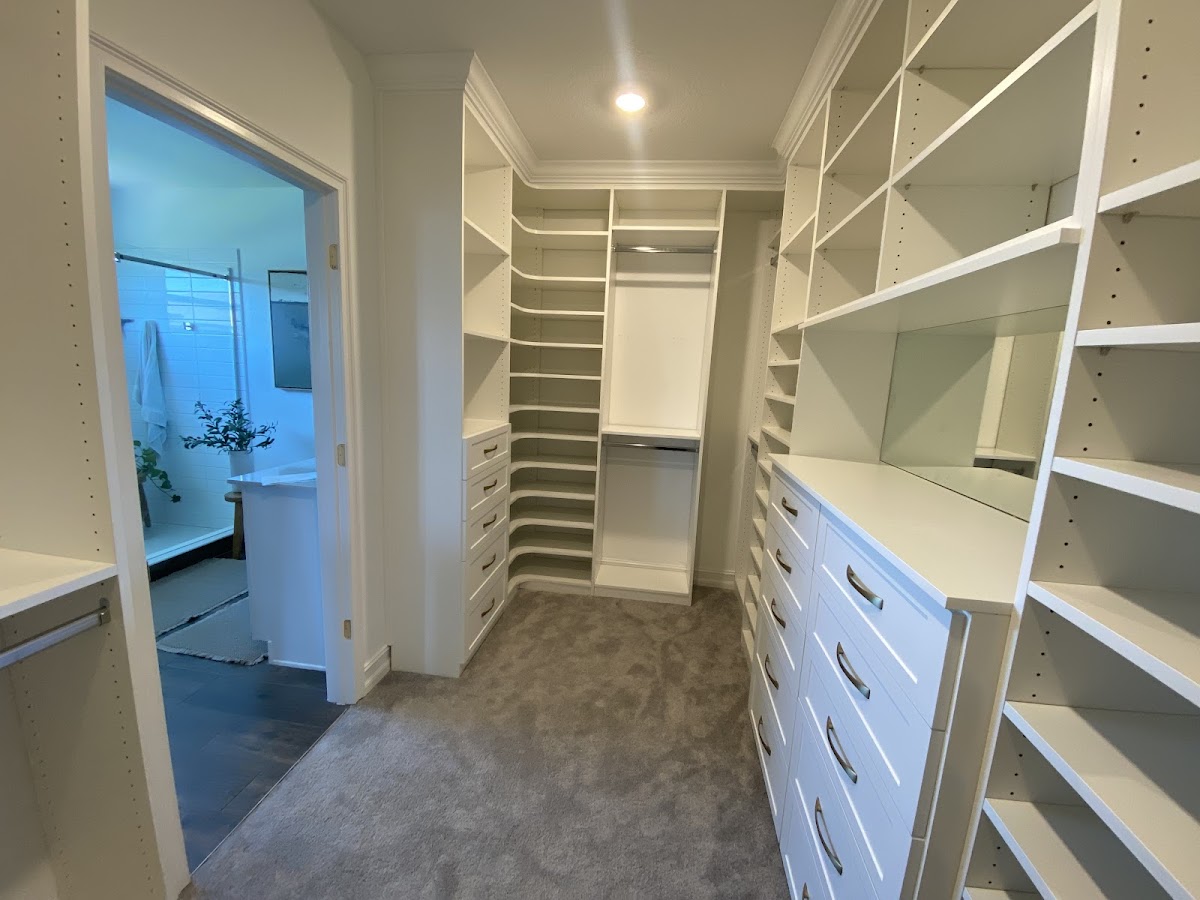
Florida humidity affects closet organization by making crowded, poorly ventilated spaces harder to keep fresh, dry, and orderly. Seasonal storage adds to the problem when beach gear, guest linens, holiday items, and off-season clothing compete with everyday wardrobe space. Well-planned custom closet systems can separate those categories and improve airflow.
For homeowners in Bradenton, Sarasota, Lakewood Ranch, and nearby coastal areas, a good closet layout should account for airflow, visibility, and rotation. Dream Closets designs storage systems with those local realities in mind.
Why does humidity make closet clutter worse?
Humidity makes clutter worse because tight spaces hold moisture. When clothes are packed together, air cannot move between garments. Shoes, bags, and folded stacks can trap dampness near the floor or back wall.
That does not mean every closet has a moisture problem. It means crowded closets are less forgiving in Florida than they might be in a drier climate. A layout that keeps items spaced, visible, and off the floor is easier to maintain.
Closets near bathrooms, laundry rooms, garages, or exterior walls deserve extra attention because those areas can experience more temperature and humidity changes.
What are the signs that humidity is affecting a closet?
Common signs include musty odors, shoes that smell stale, clothing that wrinkles quickly, leather goods that feel tacky, and bins that collect dust or moisture near the floor. You may also notice that the closet feels warmer or more closed-in than the bedroom.
These signs do not always mean there is a serious issue. Sometimes the fix is as simple as reducing crowding, improving airflow, and moving seasonal items out of the everyday zone.
If you see visible mildew, water stains, or damp drywall, solve the moisture source before investing in a new closet system.
How much space should clothing have?
Clothing should have enough space that items slide without force and do not stay compressed all week. As a simple guide, plan about 1 inch of rod space for most shirts and more for jackets, coats, or bulky garments.
That spacing helps you see what you own and helps air move between items. It also reduces wrinkles because clothes are not crushed against each other.
For folded items, shorter stacks are usually better than tall stacks. Shelves spaced around 10 to 14 inches apart often keep folded clothing easier to reach and less likely to collapse, though the right spacing depends on the items.
Where should seasonal items go?
Seasonal items should go in zones that are reachable but not prime everyday space. The best locations are upper shelves, labeled bins, secondary closets, garage cabinets, or dedicated laundry room storage, depending on what the item is.
Everyday items should stay between shoulder and knee height whenever possible. That is the easiest zone to reach. Holiday decor, guest bedding, luggage, and rarely used clothing can go higher.
In many Dream Closets projects, upper shelves are designed intentionally for seasonal storage instead of becoming a random overflow shelf.
What materials work better in Florida closets?
Closet materials should be durable, cleanable, and appropriate for indoor humidity. Many professionally built systems use thermally fused laminate or similar cabinet-grade surfaces because they are stable, easy to wipe down, and available in finishes that match the home.
Wire shelving can allow airflow, but it often lacks the structure needed for shoes, drawers, folded stacks, and finished storage zones. The right system balances airflow with practical organization.
Material choice matters most when the closet is used heavily or sits in a humid part of the home. A professional designer can recommend finishes and layouts that make sense for the room.
How should shoes and bags be stored in humid weather?
Shoes and bags should be stored where they can dry and be seen. Avoid stuffing recently worn shoes into closed bins right away, especially after rain or a humid day. Give them air before returning them to storage.
Open shelves, angled shelves, or ventilated zones work well for everyday shoes. Special occasion shoes can be stored higher or in boxes if they are clean and dry first.
Handbags should not be crushed into piles. Open cubbies or shelves help them hold their shape and make it easier to rotate what you use.
How often should a Florida closet be reset?
A light reset every season is usually enough for a well-designed closet. In Southwest Florida, that often means reviewing summer clothing, guest items, travel gear, beach items, and holiday storage a few times per year rather than doing one major cleanout.
Set aside 30 to 60 minutes at the start of a new season. Move rarely used items up, bring current items into easy reach, wipe shelves, and check shoes or bags before storing them long term.
If the closet needs a full reset every month, the storage plan is probably not doing enough work.
What should move to garage or pantry storage instead?
Not every seasonal item belongs in a bedroom closet. Beach chairs, bulk paper goods, sports gear, tools, holiday bins, and oversized luggage often work better in garage cabinets, laundry storage, or a planned utility area.
Moving those items out of the closet protects everyday wardrobe space. It also keeps damp outdoor gear away from clothing, shoes, and accessories that should stay clean and dry.
Dream Closets often looks at the whole storage picture, not just one closet. A closet may be easier to organize after the garage, pantry, or laundry room has a proper place for overflow. That whole-home view also prevents the same clutter from simply moving to the next room.
When should you ask for a custom storage plan?
Ask for a custom storage plan when the same humidity and seasonal storage problems keep returning. If the closet is always crowded, the floor is always full, or seasonal bins block everyday clothing, the layout needs better zones.
Dream Closets can help plan closets, garage storage, pantry storage, and built-ins for homes in Bradenton, Sarasota, Lakewood Ranch, and surrounding areas. If humidity and seasonal overflow are making your storage hard to maintain, request a quote or learn more about the right storage options for your home.