If your closet still feels full after you declutter, the problem is usually the layout, not the amount of clothing you own. Most builder-grade closets waste vertical space, mix short and long hanging together, and leave shoes, folded items, and accessories competing for the same shelf.
Dream Closets sees this often in Bradenton, Sarasota, and Lakewood Ranch homes. A homeowner removes bags of clothing, but the closet still feels tight because the storage system was never designed around the way they actually get dressed.
Why can a closet feel crowded even with fewer clothes?
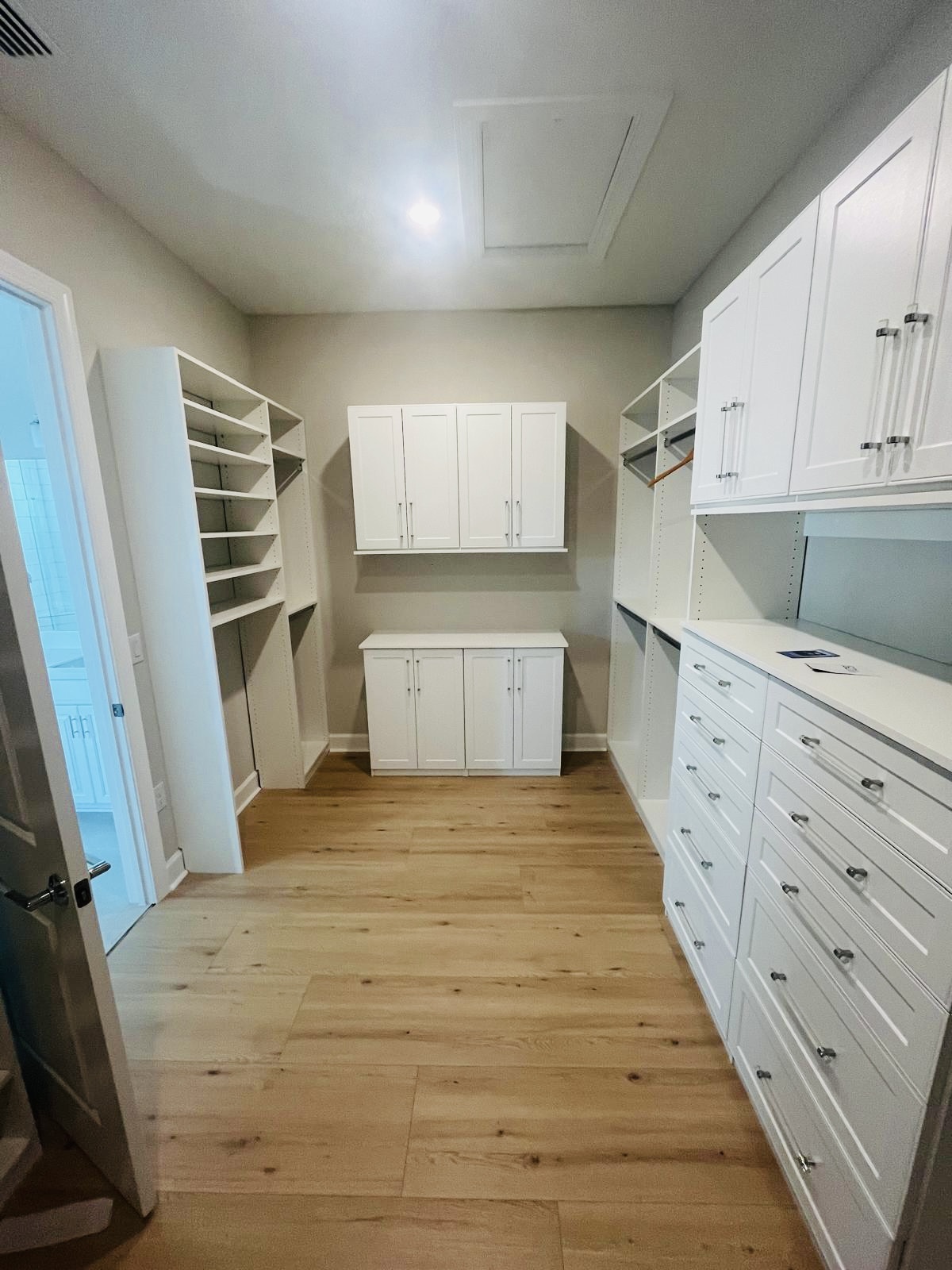
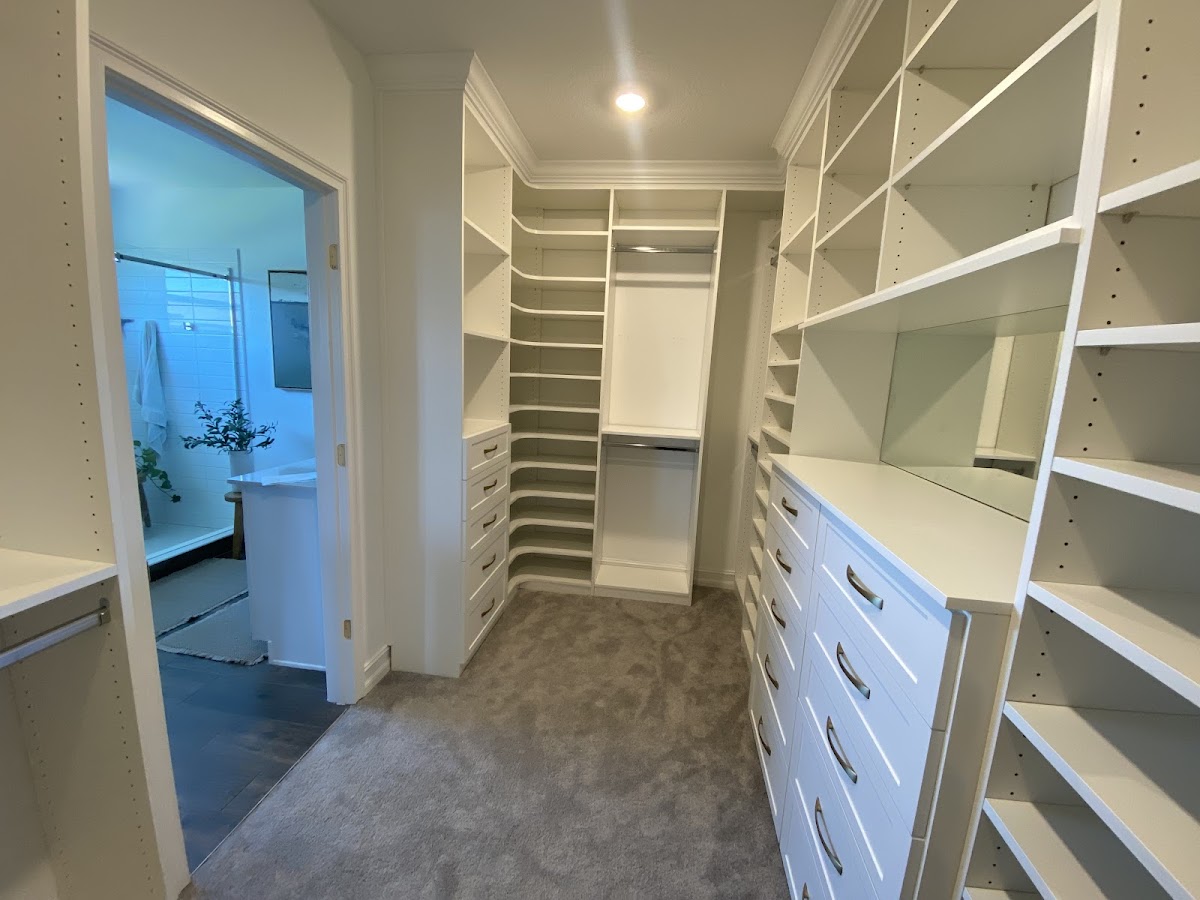
A closet can feel crowded because the usable zones are wrong. One long rod and one shelf force every item into the same storage type, even though shirts, pants, dresses, shoes, bags, folded sweaters, belts, and seasonal items all need different kinds of space.
That single-rod layout also creates dead space. If shirts hang only 36 to 42 inches down, the lower half of the wall may sit mostly unused. If a shelf is too high, the space above it becomes a pile zone instead of real storage.
Decluttering removes excess. It does not create a better system. If the old system gives every remaining item a poor home, the closet still feels messy.
What signs point to a layout problem instead of a clutter problem?
The clearest sign is that you use temporary fixes every week. If you keep adding bins, baskets, over-the-door hooks, or plastic drawers, the closet is telling you it lacks built-in zones.
Another sign is repeated reorganization. If the closet looks good for two days and then slides back into the same pattern, the design does not match the routine. A good closet should make the easy choice the organized choice.
Look for these common symptoms:
- Short items hang above empty floor space.
- Shoes live in piles instead of rows.
- Folded items stack too high and topple.
- Accessories have no dedicated drawer or tray.
- Seasonal items crowd the everyday items.
- You cannot see what you own without moving other things.
If two or more of these are happening, the problem is not just clutter. It is storage design.
How much space does double hanging really add?
Double hanging can nearly double the usable hanging space on a wall when most of the wardrobe is shirts, blouses, folded-over pants, jackets, and shorter items. A typical double-hang section uses one rod around 40 inches high and another around 80 inches high, depending on ceiling height and the homeowner's wardrobe.
That does not mean every wall should be double hang. Dresses, long coats, robes, and suits need full-length space. The value comes from matching rod height to the items you actually own.
In many Sarasota and Bradenton closets, Dream Closets can free up meaningful room simply by separating short hang, long hang, shoes, and folded storage instead of forcing them into one continuous rod.
Why do shoes make closets feel messy so quickly?
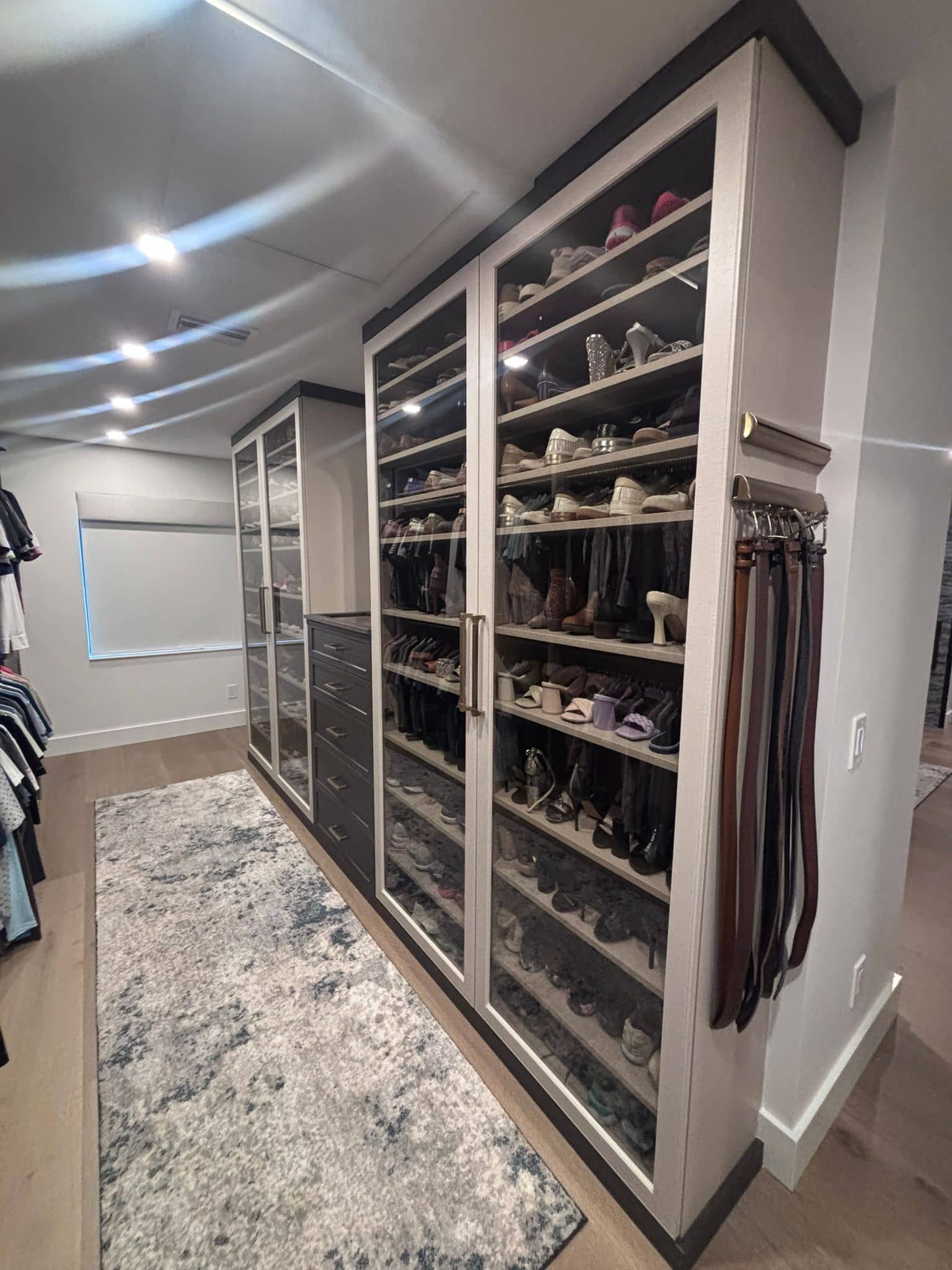
Shoes create clutter because they are bulky, irregular, and used at different frequencies. A pair of sneakers, sandals, boots, and dress shoes all need different spacing. When they share the floor, they spread out fast.
Flat shelves work well for everyday shoes. Angled shelves make dress shoes easier to see. Tall cubbies or adjustable shelves work better for boots. The right answer depends on the number of pairs, the types of shoes, and whether the homeowner wants display or hidden storage.
As a simple planning figure, allow about 8 to 10 inches of shelf width for most pairs of adult shoes. Boots and larger sneakers may need more. Counting shoes before a closet consultation helps the designer avoid underbuilding one of the most-used zones.
What should you do before buying more bins?
Before buying more bins, sort the closet by category and count what remains. Count hanging items, folded items, shoes, handbags, belts, ties, jewelry, hats, and seasonal items. This gives you the real storage demand.
Then ask what should be visible every day. Everyday clothing should be reachable without moving bins. Seasonal or occasional items can go higher. Keepsakes and rarely used items may not belong in the primary closet at all.
Bins are useful when they support a plan. They become visual noise when they are used to compensate for missing shelves, drawers, or shoe storage.
Which items should stay out of the primary closet?
The primary closet should serve the clothing and accessories you use most often. It should not become the storage room for luggage, old paperwork, extra bedding, holiday decor, or keepsakes that do not need weekly access.
This is where many decluttering projects stall. Homeowners remove clothes they no longer wear, but leave non-wardrobe storage in the same prime space. The closet feels full because the wrong categories are still there.
A better approach is to give each category a job. Everyday clothing gets the easiest access. Occasional wardrobe items go higher or farther to the side. Household overflow moves to a linen closet, garage cabinet, guest room storage, or another planned area.
How does Florida humidity affect closet crowding?
Florida humidity makes overpacked closets feel worse. Clothes need airflow. When garments are packed tightly, moisture stays trapped, fabrics wrinkle faster, and shoes or bags can develop odors. This is especially common in closets near bathrooms, exterior walls, or laundry spaces.
A better layout gives items enough breathing room and makes it easier to rotate seasonal clothing. It also reduces the pileups that block air movement near walls and floors.
For Bradenton, Sarasota, and Lakewood Ranch homes, Dream Closets often recommends durable closet materials and layouts that keep items visible, spaced, and easy to maintain in the local climate.
When is it time to get a closet design quote?
It is time to get a quote when you have already decluttered, already reorganized, and the same pain keeps coming back. That means the closet needs a structural fix, not another weekend reset.
A professional design quote should show how the space will be divided, how many drawers or shelves are included, where shoes will go, and how the system handles everyday versus seasonal items. Most in-home consultations take about 45 to 60 minutes, and most closet installations are completed in one day after the system is built.
If your closet still feels full after decluttering, Dream Closets can measure the space, review what you store, and show you custom closet systems that fit the way you use the room. Request a quote for the custom closet options available in the Bradenton, Sarasota, and Lakewood Ranch area.